
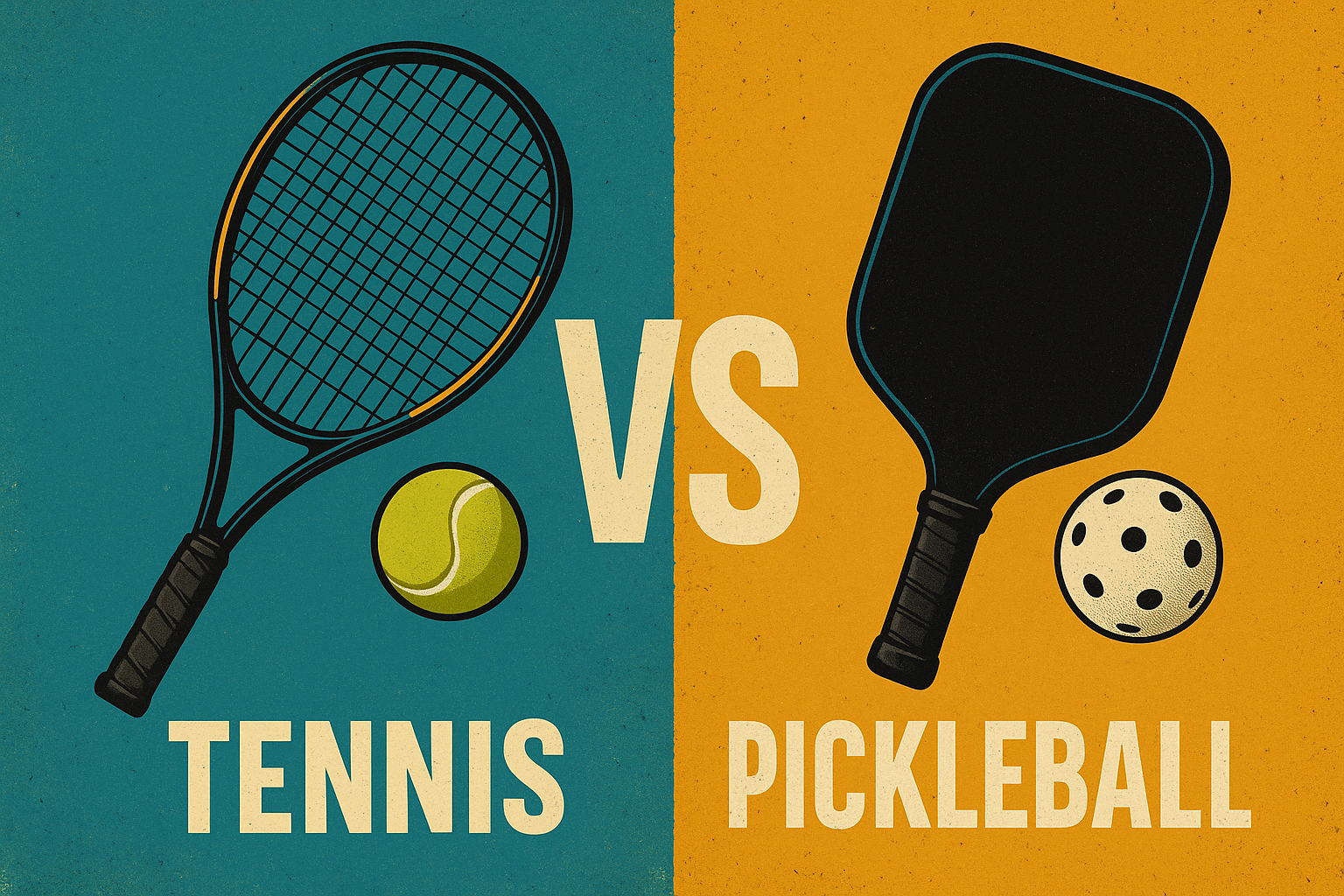
There’s a familiar sound you hear now when you walk past public parks — a sharp pop, pop, pop echoing off the fences. At first, you might think someone’s drilling serves with an old wood racket, but then you turn the corner and see it: four pickleball courts squeezed onto one tennis court, filled with people laughing, swinging paddles, moving just enough to break a small sweat.
Pickleball, once the quirky backyard game of retirees and vacationers, has transformed into a full-blown cultural phenomenon. It’s everywhere now — in professional sports ownership groups, on celebrity Instagram feeds, on ESPN highlight reels, and in conversations between neighbors you never thought would pick up anything athletic. It’s impossible to deny that something big is happening.
But in the tennis community — both diehard traditionalists and curious cross-overs — a lingering question floats in the air like a lob drifting just a little too high:
Is pickleball a passing craze destined to fade like racquetball once did? Or is this something different? Something lasting? Something that might even reshape racquet sports forever?
This is a story about that question. And like all good tennis stories, it’s filled with history, emotion, rivalry, evolution, and the possibilities of the future.
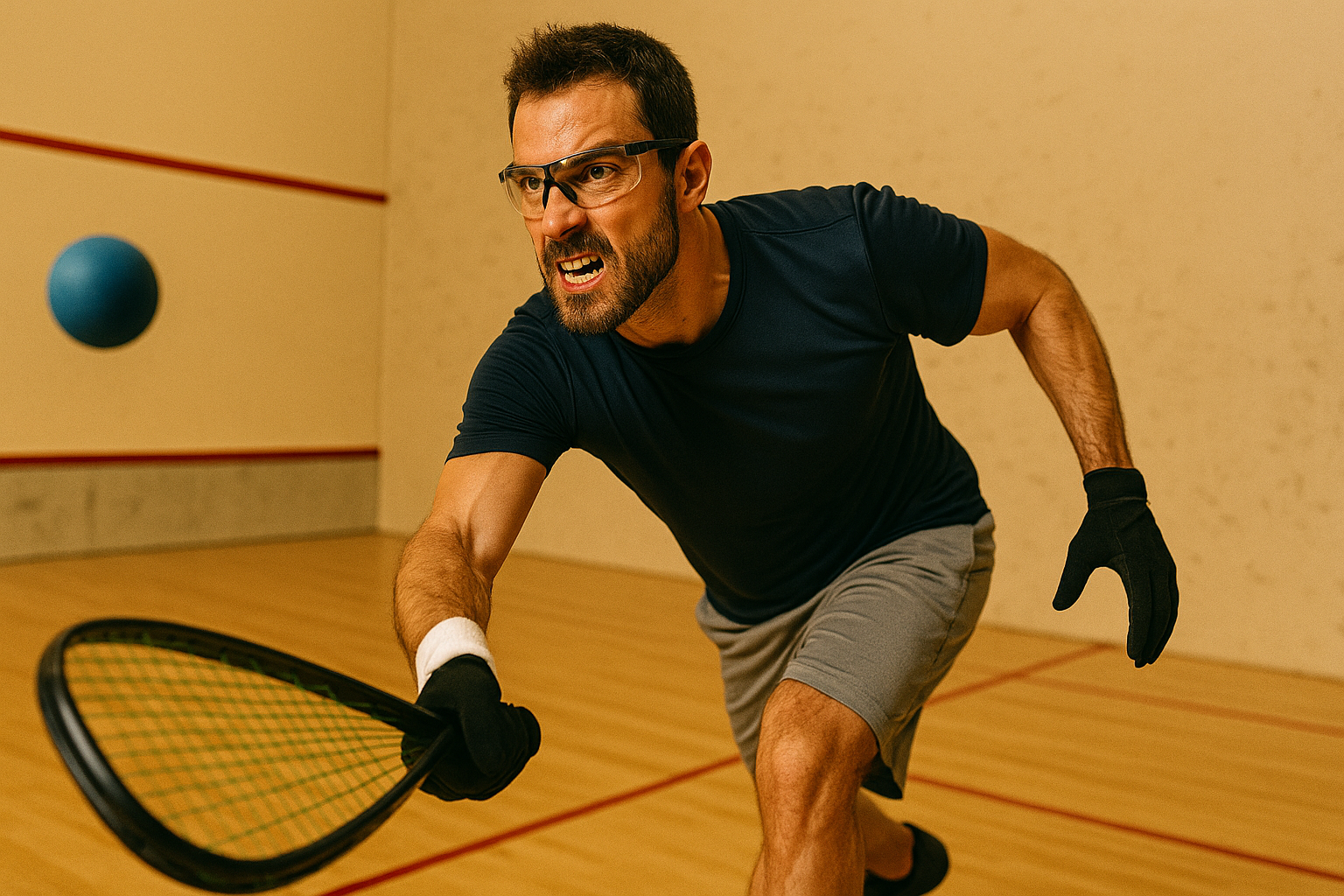
If you grew up in the 70s, 80s, or even early 90s, you remember racquetball courts the way we remember blockbuster video stores — always full, always buzzing, always alive. Fitness clubs built entire wings just for racquetball. Leagues were packed. People played after work in office attire. It was fast, loud, addictive.
And then, slowly… it wasn’t.
The same courts that once felt electric turned hollow and quiet. Facilities converted them into yoga studios, spin rooms, storage closets. The sport didn’t die, but it shrank — quietly, gradually, almost apologetically.
When you talk to players who lived through racquetball’s peak, they always describe the fall the same way:
“It didn’t disappear all at once. It just sort of… slipped away.”
Now, as pickleball explodes at speeds racquetball never dreamed of, the tennis world watches with fascination — and a little caution.
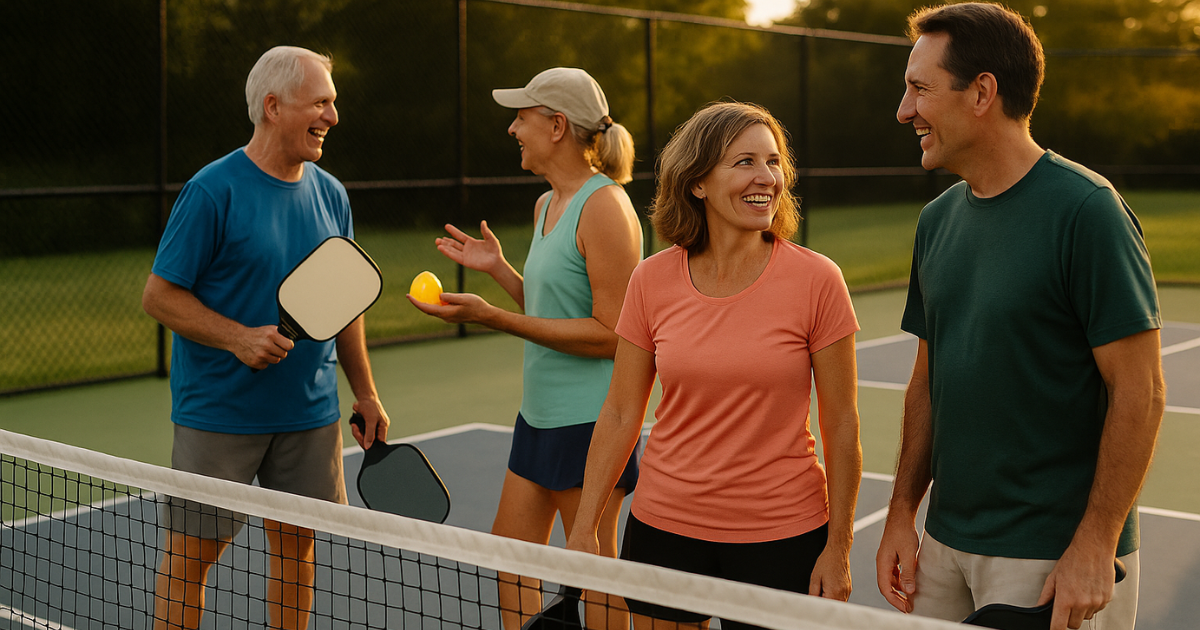
There’s something undeniably charming about pickleball. The small court. The friendly banter. The immediate sense of belonging. The low barrier of entry. The dopamine hit of a long dink rally that feels strangely meditative. And above all, the community — the way people gather not just to play but to laugh, socialize, connect.
Most sports start slow and build gradually. Pickleball didn’t. It ignited.
But why?
Because the world changed.
People wanted movement but not intensity. Friendship but not commitment. Exercise but not exhaustion. A sport that felt playful instead of punishing. And pickleball delivered exactly what modern life was craving — simplicity, joy, presence, connection.
The same way running boomed during the fitness craze of the 70s, and racquetball exploded during the social-club era of the 80s, pickleball became the perfect sport for today.
But is it built for tomorrow?
That’s where the racquetball comparison becomes complicated.
Tennis players pretend not to care, but we do. Deeply. Maybe more than we admit.
We care because public tennis courts are being replaced or over-painted.
We care because players are being asked to share space in ways we never imagined.
We care because the sounds, the rhythms, the culture of our beloved sport are being blended with something new — and change, no matter how promising, always feels a little jarring.
Some tennis lovers dismiss pickleball outright.
Some embrace it with curiosity.
Most fall somewhere in between, holding onto tennis with one hand and tapping a pickleball paddle with the other, wondering what the future looks like.
But the question still remains:
Is this a momentary boom like racquetball, or a long-term cultural shift?
To understand this, we need to follow the story — not of pickleball — but of tennis itself.
People forget this, but tennis has gone through its own waves of popularity.
When rackets went from wood to graphite, the sport surged.
When Federer, Nadal, and Serena rose, tennis became poetry in motion again.
When COVID hit, tennis was suddenly the “safe” sport and participation skyrocketed.
Tennis has survived cultural shifts, technological shifts, generational shifts — even the rise of hundreds of other activities.
Why?
Because tennis offers what few sports can: depth.
Tennis is skill layered on skill.
It’s problem-solving, footwork, endurance, angles, patterns, momentum shifts.
It’s a lifetime puzzle — the kind you can’t finish but never get tired of trying.
That depth is why tennis has endured.
And ironically, it’s also why pickleball grew — because not everyone wants depth. Some want dopamine, community, ease, and accessibility.
Pickleball didn’t replace tennis.
It filled the spaces tennis didn’t.
That alone separates it from racquetball.
Every sport has two phases: the explosion and the equilibrium.
Pickleball is still very much in its explosion.
But what happens when the hype settles?
Will younger athletes commit to it long-term?
Will leagues and teams sustain themselves financially?
Will pros become household names?
Will it become a spectator sport with the same emotional stakes as tennis?
Will players stick with it once the novelty fades?
If pickleball is going to become racquetball 2.0, these are the cracks that will show first.
But something interesting is happening — something racquetball never had.
When racquetball boomed, it lived inside fitness clubs.
When pickleball boomed, it lived inside communities.
Pickleball thrives not because of skill ceilings or physical demands, but because of emotional connection. It’s a lifestyle sport. A porch-light sport. A “grab your paddle and come hang out” sport.
Racquetball was competitive.
Pickleball is relational.
That gives it roots racquetball never had.
And yet — tennis must still be part of this conversation.
Because tennis, unlike racquetball, is not going anywhere.
And that changes everything.
You can’t walk into a tennis center today without noticing the overlap.
Tennis players warm up with pickleball.
Pickleball players drift toward tennis for a challenge.
Tennis parents dabble while their kids train.
Clubs offer blended memberships.
Camps include both sports.
Some coaches teach both.
Some juniors play both.
For the first time in decades, racquet sports are merging rather than competing.
This wasn’t the case with racquetball.
Racquetball isolated itself indoors, away from tennis culture.
Pickleball planted itself directly in tennis’s front yard — and then built a picnic table.
And that might be its biggest advantage.
Let’s say this plainly because tennis players feel it deeply:
Losing a court feels like losing a piece of your history.
Some cities have replaced entire tennis centers with pickleball complexes. Some carve tennis courts into four smaller squares like a patchwork quilt. Some debate over which sport “deserves” the space more.
This can create tension — and understandably so — because tennis players know something:
Once a court is converted, it rarely comes back.
But this reality doesn’t mean pickleball is destined to outgrow tennis. Or that tennis will shrink. Or that the two sports are enemies.
It simply means we are entering a new era where shared space becomes shared responsibility — a cultural negotiation racquetball never had to navigate.
Pickleball’s fate will depend partly on how communities solve this problem.
If they find balance, pickleball grows sustainably.
If they don’t, tennis will push back, and cities will recalibrate.
Either way, tennis remains an anchor — stable, global, generational.
Professional racquetball never cracked mainstream culture. It didn’t have global stars. It didn’t have million-dollar sponsorships. It didn’t have a Grand Slam equivalent. It didn’t have emotional narratives that captured hearts the way tennis does.
Pickleball is trying.
They have leagues, celebrities, teams, prize money, and broadcast deals.
They have owners with deep pockets.
They have excitement and momentum.
But they don’t yet have history. Rivalries. Moments that stop time.
They don’t have a Federer vs. Nadal.
They don’t have a Serena Williams storyline.
They don’t have a “where were you when…?” match.
Professional tennis is cinema.
Professional pickleball is early-season television — fun, addictive, but still finding its identity.
If pickleball stalls professionally, the sport may plateau recreationally.
That’s the future pivot racquetball couldn’t make.
Here’s the truth tennis players don’t say out loud:
There are things pickleball does beautifully.
It builds community fast.
It makes newcomers feel confident quickly.
It creates social chemistry — almost instantly.
It brings people who were once inactive into the world of racquet sports.
It reintroduces adults to movement.
And surprisingly, it gets many people interested in tennis for the first time.
There are countless pickleball players who, after six months of dinking, look at the neighboring courts and think:
“Maybe I’ll try tennis again.”
Pickleball is not always a competitor. Sometimes it’s a gateway.
Racquetball never did that.
Pickleball thrives on short rallies. Quick points. Instant gratification.
Tennis thrives on endurance. Patterns. Character arcs within matches.
Pickleball is a spark.
Tennis is a flame that keeps burning.
This matters because long-lasting sports — the ones that survive generations — offer depth that grows with the athlete.
Golf has this.
Martial arts have this.
Tennis has this.
Pickleball may eventually develop it — but it’s not there yet.
If pickleball cannot evolve into a deeper technical sport at higher levels, interest may taper, mirroring racquetball’s decline.
If it can, it carves out a permanent place beside tennis.
Only time will tell.
After studying the trends, the communities, the economics, and the culture, here is the Tennis2Tennis perspective — honest, sincere, and from the heart:
No — pickleball will not disappear like racquetball.
But it also will not replace tennis.
Instead, pickleball will find its long-term identity as a complementary sport — growing alongside tennis, borrowing from tennis, sharing with tennis, but never overtaking it.
Tennis has history, depth, global reach, youth development, legacy, and emotional resonance that pickleball cannot yet replicate.
Pickleball has accessibility, community, and cultural momentum that tennis can learn from.
Racquetball had neither.
Pickleball will stabilize.
Tennis will remain strong.
Both will become part of the future of racquet sports.
But tennis — with its elegance, its complexity, its global heartbeat — will always be the anchor.
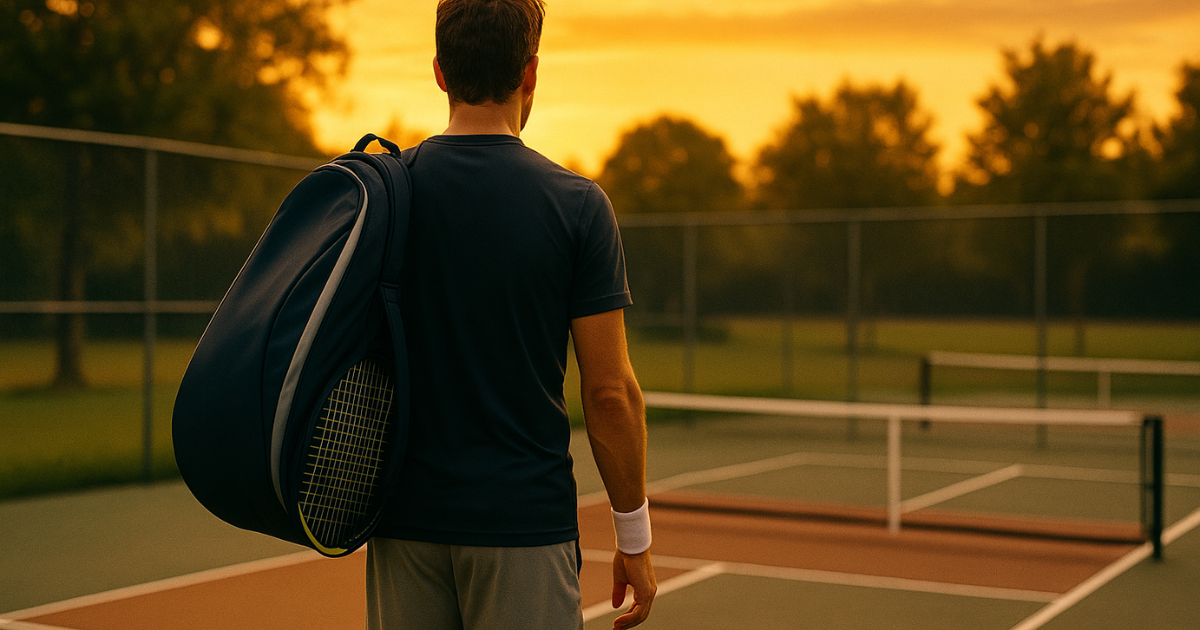
If you stand on a tennis court at golden hour — that magical time the world feels softer — you can feel something ancient, something sacred, something that has lasted generations and will last generations more. Tennis has weathered every storm, every trend, every new sport that tried to enter the court. And yet here it remains, steady as the baseline, timeless as the service line.
Sports will rise. Sports will fade. Sports will evolve.
But tennis endures.
Pickleball is welcome in the family — vibrant, social, joyful, and full of possibility. But racquetball’s fate is not pickleball’s fate, and pickleball’s rise is not tennis’s fall.
This isn’t a rivalry.
It’s a renaissance.
A revival of movement.
A rediscovery of play.
A reminder that racquet sports are more alive than they’ve been in decades.
And for those of us who love tennis, who live and breathe it, who feel the rhythm of the rally in our bones — this is something worth celebrating.
Because no matter how many sports come and go, tennis will always be home.

2 Responses
This is so true! Pickleball is evolving, but tennis will always be there.
For all of us. 😏
Tennis will always be #1!