
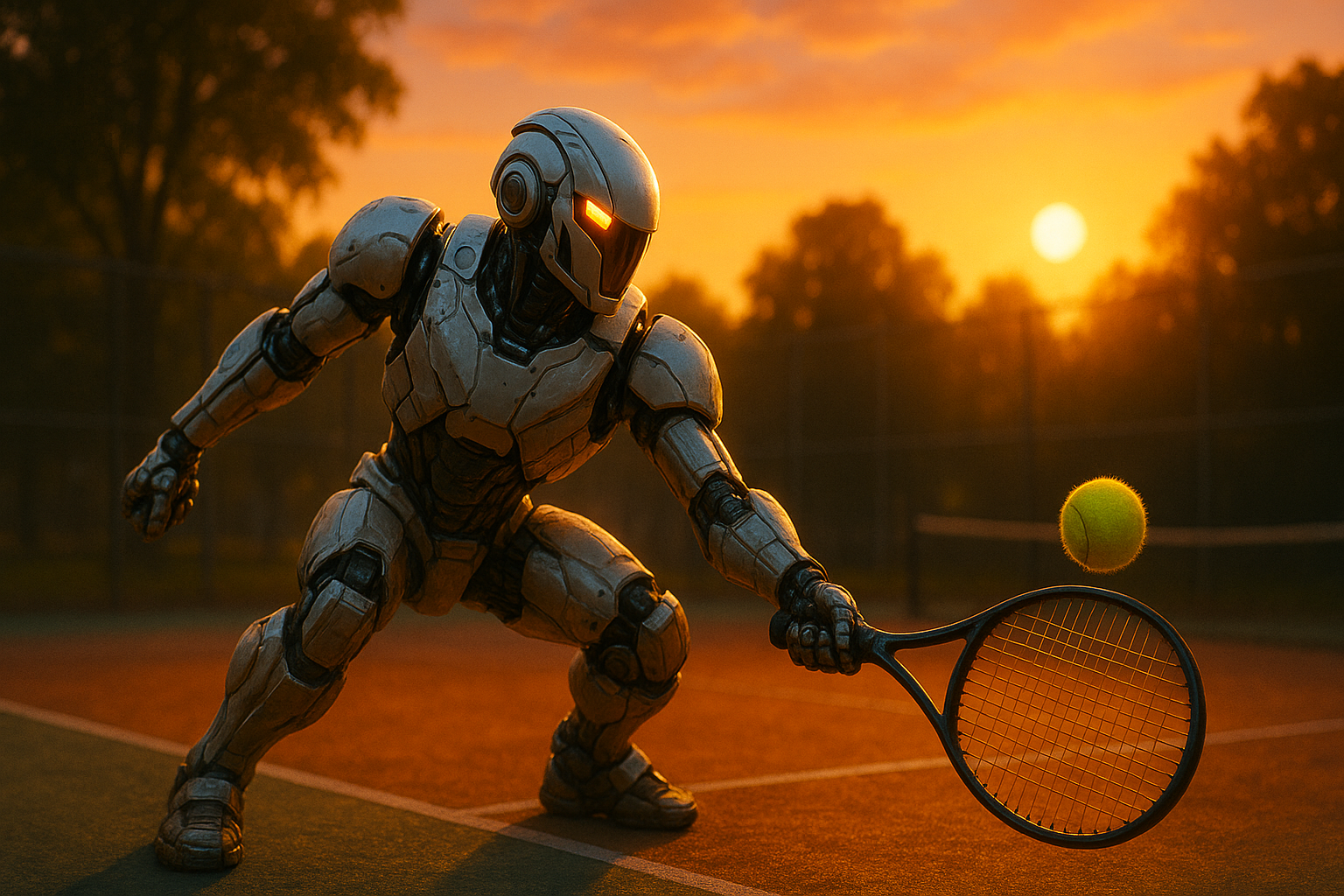
If you’ve ever stood on a tennis court and felt that flicker — that moment when the world fades and there’s just you, the ball, and the promise of who you could become — then you already understand why technology has rushed to meet the heartbeat of our sport. Tennis isn’t just evolving; it’s transforming in ways that were unimaginable even a decade ago. And the most exciting part? This transformation isn’t just for pros or academies with big budgets. It’s for every player who’s ever whispered to themselves, “I know I can get better.”
Technology is no longer sitting courtside.
It’s stepping onto the court with us — guiding, measuring, learning, and even predicting.
This is the story of how tennis tech is reshaping player development, why it matters more than ever, and how you can use it to elevate your own game starting today.
There’s this moment we all experience in tennis: you hit a ball, it feels great, and you say, “Yes — that one. I want to hit that every time.”
But the truth is, unless someone is filming you from every angle and offering instant feedback, that moment floats away like smoke.
Technology is capturing that moment — and quantifying it.
Player performance used to rely entirely on feel, memory, and repetition. Beautiful, yes. But inconsistent. Technology changes that by giving players something the human eye could never reliably track:
Suddenly, the “feel” game becomes the “know” game.
And in tennis, knowing is everything.
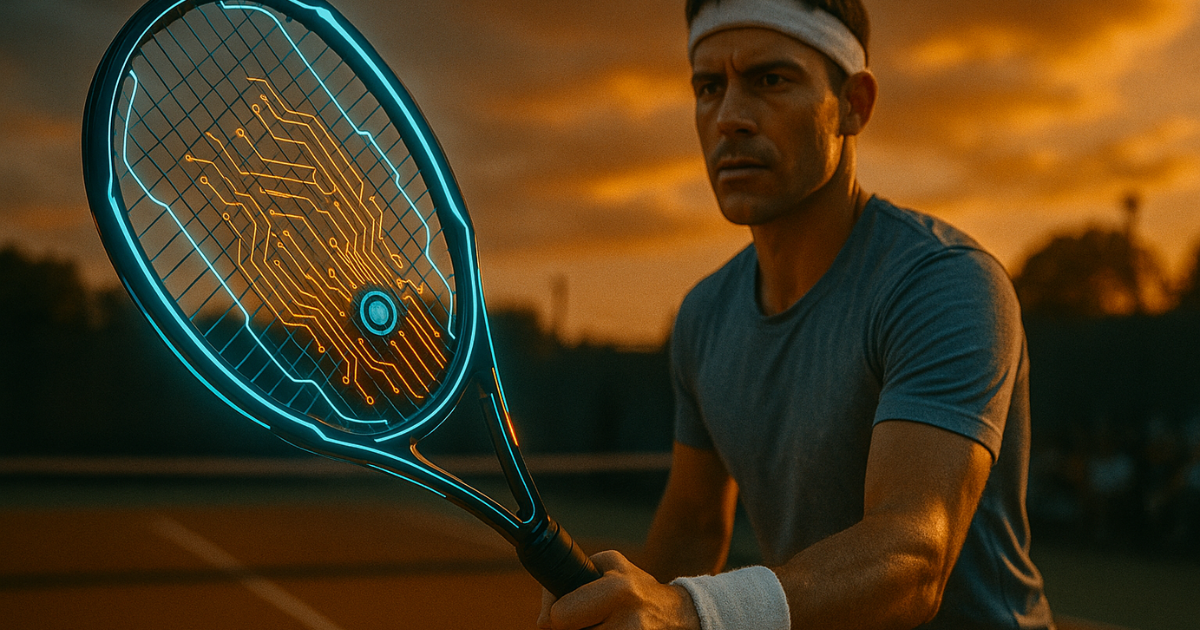
Imagine gripping your racquet and having it quietly record every detail of your swing — not to correct you mid-match, but to understand you. That’s what smart racquet technology has become: a mirror that tells the truth, gently but precisely.
These racquets can now track:
Picture this:
You finish a match.
You tap your racquet.
And suddenly, a full breakdown of your game appears on your phone — like having a personal data analyst tucked inside your bag.
One of the most powerful features emerging in next-gen racquet tech is adaptive learning algorithms. Instead of comparing you to a generic template, the racquet begins comparing you to you. Your own baseline becomes the standard.
You’re no longer chasing perfection.
You’re chasing improvement — one percent at a time.
Ask any pro, and they’ll tell you: video doesn’t lie.
But raw video often overwhelms players — too many angles, too much to analyze, not enough time. AI changes that. Now a simple smartphone clip can be transformed into:
It’s almost eerie how accurate these tools have become.
A rising junior stated that AI match analysis did something even her longtime coach couldn’t: it showed her that she loses depth on her backhand specifically when returning second serves. Not all backhands. Not all returns. Only that scenario.
That tiny detail changed her practice sessions for weeks — and the result was a player who suddenly felt “free” in matches.
AI didn’t replace coaching.
It amplified it.
This is the quiet revolution happening behind the baseline: tech that understands the why behind your mistakes, not just the what.
If racquets analyze the shot and video analyzes the strategy, wearables analyze you — the athlete.
We’re talking about sensors that track:
It still amazes me every time I see a player checking their wearable app after practice and saying, “Oh wow, that’s why my legs felt heavy today.”
Wearables remove the guesswork from training.
They bring honesty to the days you want to push and the days you should pull back.
For tennis players — who are notorious for overtraining — this is priceless.
There was a time when ball machines were… well… ball machines. They fired balls. You hit balls. That was it.
Now? They are programmable practice partners capable of designing sessions that mimic real opponents.
The latest models can:
One of my favorite stories comes from a junior training in the Midwest. She programmed her ball machine to feed wide backhand balls, then immediately attack her forehand corner — her least favorite pattern. She did this three times a week.
Six months later?
That pattern became her signature strength.
Technology didn’t just fill in a training gap.
It rewrote a part of her identity as a player.
Imagine being 15 minutes into a session and finding out your readiness score is at 40%. Instead of grinding through mediocre reps, you pivot to shadow swings and mobility work. The next day, you show up fresh instead of depleted.
Technology isn’t just measuring performance.
It’s protecting players from themselves.
If smart racquets and AI analysis feel futuristic, virtual reality feels downright unbelievable.
And yet, here we are.
VR is emerging as one of the most powerful tools for:
Imagine putting on a headset and being transported into a stadium court with thousands of virtual fans — hearing the crowd, feeling the tension — all while practicing your patterns from your bedroom.
VR isn’t about hitting balls.
It’s about training the brain to handle the moments that decide matches.
The pros already use this.
Juniors and adults will follow quickly.
One of the most jaw-dropping advancements in tennis tech is predictive modeling. These tools can now take your match history, compare it with thousands of players of similar style, and estimate:
It’s not guessing.
It’s learning — from your real tendencies and global player data.
And here’s the wildest part:
Predictive analytics doesn’t just evaluate who you are now.
It starts to predict who you are becoming.
That’s the kind of insight that used to require a team of statisticians and months of footage. Now it fits in your pocket.
And every player who has ever struggled with match nerves?
Tech is finally giving you a tool to train the intangible.
With all this innovation, there’s something important we remind ourselves at Tennis2Tennis:
Data can guide you, warn you, inspire you — but it can’t tell you how to love the grind.
It can’t replace the goosebumps you get during a big match.
It can’t measure the chill down your spine after a clean winner.
It can’t replace human coaches who understand the soul behind your game.
Technology is a translator.
It turns your passion into measurable progress.
But you are the engine.
You don’t need every gadget. Start small. Build smart. Here’s how:
If you want to understand your swing → choose a smart racquet or racquet sensor.
If you want to understand your body → choose a wearable.
If you want to understand your patterns → choose basic match-analysis apps.
Start with one. Master it. Then expand.
Don’t just collect data. Ask questions:
Information becomes transformation when it’s focused.
Tech doesn’t replace coaching — it elevates it.
A coach who understands your numbers can design sessions with laser focus. Instead of generic drills, your training becomes personal, targeted, and efficient.
The magic of tennis tech isn’t in day-to-day fluctuations.
It’s in long-term patterns.
Little improvements compound.
It’s beautiful when you see it.
VR, predictive analytics, and pressure-simulation tools help players learn to thrive in moments that used to break them.
Your mind is the final frontier.
Tech is finally giving us a roadmap.
We’re standing at the edge of something extraordinary.
In the next five years, tennis tech will likely include:
Tennis players won’t just be working harder.
They’ll be working smarter than ever before.
And the best part?
This revolution is democratizing the sport.
You don’t need a massive academy.
You don’t need a full-time staff.
You just need curiosity, consistency, and one piece of tech that meets you where you are.
Tennis2Tennis was built for one reason: to bring players closer.
Technology helps us do that in a new, powerful way.
Because when a player in New York uses AI to improve their serve, and a player in Texas uses VR to strengthen their mental game, and a junior in Florida uses a smart ball machine to perfect their patterns… they’re all part of the same evolution.
We grow together by learning from each other.
And tennis tech is simply the new language we share.
Our platform’s mission — connection, knowledge, growth — aligns perfectly with the rise of tennis technology. As we evolve into podcasts, curated product collections, and community-driven content, tech will be at the heart of what we explore and celebrate.
Because the future of tennis isn’t somewhere far away.
It’s already in your hand, on your wrist, in your phone.
It’s whispering: Let’s get better today.
If you’re reading this, you’re already part of something bigger — a community of players who believe in the beauty of the game and the thrill of improvement.
Technology isn’t here to complicate your journey.
It’s here to illuminate it.
Let it guide you.
Let it challenge you.
Let it show you who you could become — not in theory, but in data, patterns, and real, measurable progress.
Tennis has always been a dance between precision and passion.
Now, with tech as your partner, the choreography becomes limitless.
Welcome to the next chapter of your game.
Welcome to the world where passion meets innovation.


2 Responses
So cool!
Tech is so important and popular nowadays.
So cool! 🎶
Yes Milli! Tech is so important in the tennis world.