
You step onto the court with a basket of balls, the sun just beginning to settle into that perfect golden angle. Your shoes squeak. Your grip tightens. You don’t say it out loud, but you’re hoping today’s session actually sticks. Not just hitting for the sake of hitting — but training with purpose.
This is where crosscourt rallying quietly becomes your greatest teacher.
It doesn’t shout. It doesn’t demand flashy winners. It simply asks you to stay present, stay disciplined, and trust the process. And if you let it, crosscourt rallying will reshape not only how you train — but how you think about tennis.
This isn’t just another drill. This is the foundation of smart, sustainable, high-level tennis. And by the end of this story, you’ll never look at a crosscourt rally the same way again.
You start the rally crosscourt. Forehand to forehand. Backhand to backhand. No down-the-line hero shots. No rush to finish.
At first, it feels almost too simple.
But then something interesting happens.
Your feet begin to adjust automatically. Your spacing improves. You stop over-hitting. Your ball starts landing deeper — not because you’re swinging harder, but because your timing is cleaner.
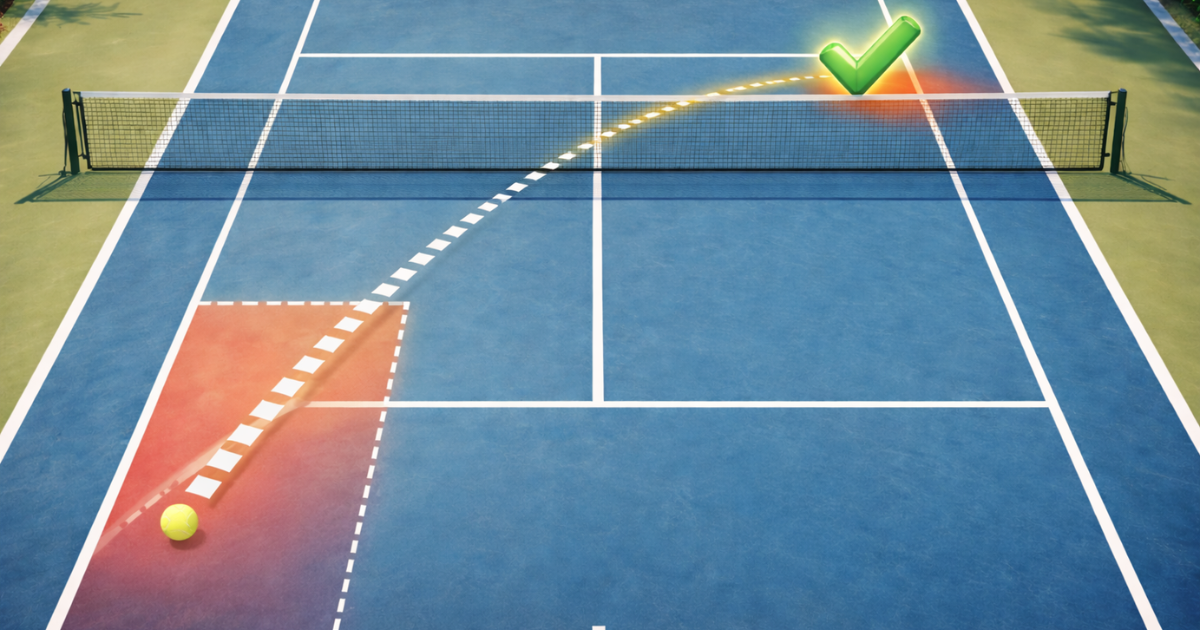
Crosscourt rallying works because it mirrors the geometry of the court. The net is lower in the middle. The court is longer diagonally. You’re giving yourself margin without sacrificing pressure.
And here’s the truth most players overlook: great tennis is built on margin, not miracles.
When you train crosscourt, you’re training the highest-percentage patterns in the sport. The patterns that show up in long matches. The ones that win points when nerves kick in.
Watch any high-level match long enough and you’ll notice something: most points start, build, and often end crosscourt.
That’s not coincidence. That’s strategy.
Crosscourt rallying allows you to:
When you hit crosscourt, your recovery steps are shorter. Your balance stays intact. Your court positioning stays honest.
You’re not chasing the point — you’re constructing it.
And when you train this way consistently, your match play begins to feel calmer. Slower. More intentional.
Here’s something no one tells you upfront: crosscourt rallying fixes your footwork without you thinking about footwork.
Because the ball is coming back to the same general zone, your body starts learning efficient movement patterns naturally. You split step on time. You adjust spacing instinctively. You stop reaching.
You begin to feel what “being set” actually means.
And over time, you realize you’re not late as often. You’re not jammed as frequently. You’re balanced through contact — not because someone yelled “move your feet,” but because the rally demanded it.
That’s real training. The kind that transfers.
At some point in your crosscourt rally, you’ll feel the urge to hit harder.
Resist it.
Crosscourt rallying teaches you a better obsession: depth.
When you focus on clearing the net by three feet and landing the ball past the service line, you start winning the invisible battle. Your opponent backs up. Their contact drops. Their options shrink.
And here’s the beautiful part — you’re doing this at 70–80% pace.
You’re learning how to apply pressure without stress.
That lesson alone can extend your career, reduce unforced errors, and make you feel more confident on big points.
This is where the drill becomes something deeper.
As the rally stretches longer, your mind starts negotiating:
Should I go for more? Should I change direction? Should I stay patient?
Crosscourt training forces you to sit with discomfort. To stay disciplined when nothing flashy is happening. To trust repetition.
And that’s exactly what match pressure demands.
You’re training emotional control. Decision-making. Pattern recognition.
You’re learning when not to pull the trigger — which is often more important than knowing when to attack.
Here’s a simple rule that changes everything:
You don’t earn the down-the-line shot until you’ve won the crosscourt exchange.
When you train with this rule, your tennis matures.
You stop bailing out of rallies. You stop missing wide by inches. You start feeling when your opponent is truly off-balance — not when you hope they are.
And when you finally change direction, it feels obvious. Clean. Inevitable.
That’s how points should feel.
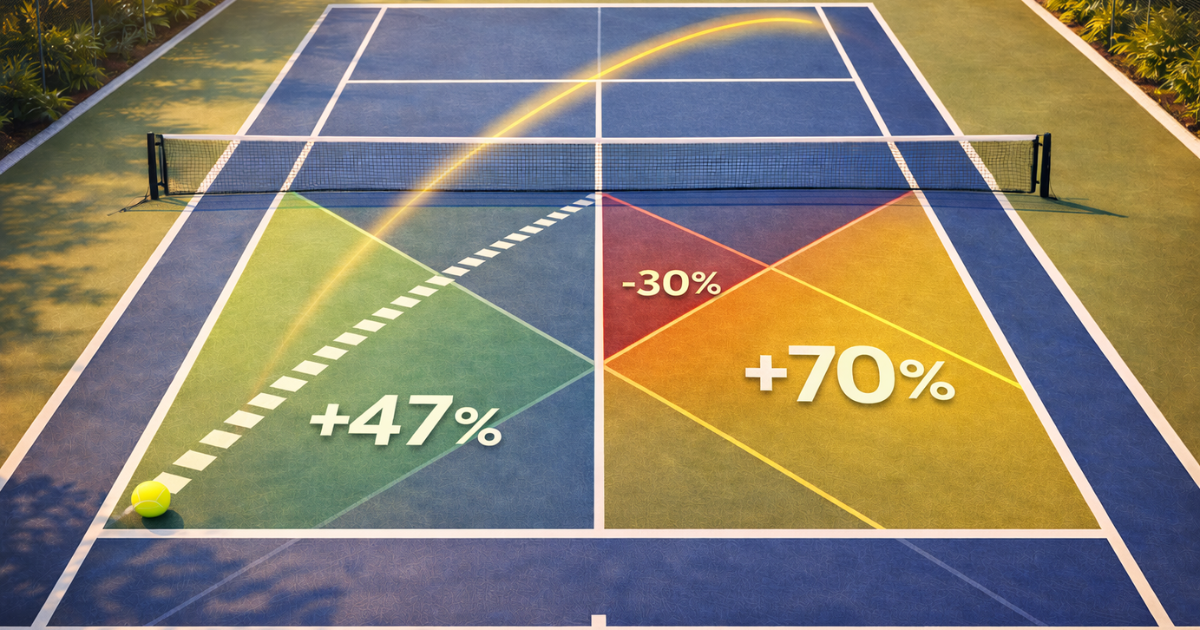
Crosscourt rallying doesn’t make you passive — it makes you precise.
Once you’re consistent crosscourt, you can layer in:
Height variation
Spin changes
Tempo shifts
Inside-out patterns
Short-angle creation
Now you’re not just rallying. You’re playing chess at full speed.
And because your foundation is solid, your aggression has intention — not desperation.
Confidence doesn’t come from highlight shots.
It comes from knowing you can:
Rally 20 balls without panicking
Reset after a mistake
Trust your patterns under pressure
Outlast your opponent mentally and physically
Crosscourt rallying gives you receipts. Proof. You’ve been here before.
When the score tightens, your body remembers the work.
Try this the next time you train:
This isn’t about volume. It’s about awareness.
Tennis is noisy. Everyone has a new drill, a new hack, a new secret.
Crosscourt rallying is quiet. Proven. Honest.
It doesn’t promise overnight transformation. It offers something better — lasting improvement.
It teaches you patience in a sport that constantly tempts you to rush. It teaches you discipline in moments that demand restraint. And it reminds you that tennis, at its core, is about connection — to the ball, the court, and yourself.
If tennis has ever felt overwhelming…
If you’ve ever overthought your training…
If you’ve ever left the court frustrated instead of fulfilled…
Come back to the crosscourt rally.
Stand on the baseline. Pick a target. Commit to the exchange.
Ball by ball, you’ll feel it — the rhythm, the clarity, the joy.
This is where passion meets progress.
This is where training becomes personal.
This is where Tennis2Tennis lives.
And the next time someone asks why you spend so much time rallying crosscourt, you’ll smile.
Because you know — this is where real tennis begins. 🎾


2 Responses
This is amazing! Crosscourt rallies are used by the pros a lot, but I never knew why.
But now, I know!
Yes! Yes! So important to learn this concept! Keep it up!